Self-Esteem
By: Dr. Suzanne LaCombe, June 2006.
Draft Version
My psychological association (the BCPA) has a referral service and receives hundreds of calls over the year. During that time, the BCPA recorded the reasons people said they were looking for therapy. "Self-esteem" topped the list of the top ten reasons given.
I've noticed in my own practice that even those people who didn't bring self-esteem up in the session will say things that suggest this is what they want to get from their therapy.
These are the kind of comments I've heard from my clients that reflect a desire to improve their self-esteem:
- "People think I'm easy-going but I put on a false front."
- "It is difficult to think of my own needs when they conflict with the needs of others."
- "I'm considered successful, but I don't feel accomplished. I worry too much what others think of me. No one would even guess this about me."
Low self-esteem profoundly impacts many areas of our lives, our thinking processes, our emotions, our desires and the choices we make.
No one can give us self-esteem. The person who depends on others for approval risks further erosion of an already shaky sense of self. I've certainly seen this dynamic played out in relationships where one person depends on his or her partner to derive their status in life.
Self-Help Books and Self-Esteem
Many self-helps books that attempt to create greater self-esteem are based on the notion that if we think differently, we will feel differently. In my opinion this has been only mildly successful and for only a small portion of the population.
Nor does this notion take into account one's level of activation. The more we are activated, the more difficulty we will have in changing our thoughts. It's far easier to reduce one's level of activation and then to embark on a 'change my thoughts program'.
But there's even a more fundamental problem with the notion of changing our thoughts to improve our self-esteem. Our self-esteem is rooted in the implicit memories that were established for the most part during our infancy. These patterned responses to our emotional life are not easily re-programmed and certainly not easily done through changing our thoughts.
You see, there are far stronger connections going from our emotional right brain to our thinking left brain than from our thinking brain to our emotional brain. Why is this significant?
For one thing it suggests that to create embodied change we should work first from the emotional brain. As we shift these relational patterns, we will naturally think differently and I might add, feel differently.
How do we do this?
I thought you'd never ask...through an attuned relationship with a caring other. For many people this is their therapist.
Need a lift on a rainy day?
Try this fun little exercise to boost your self-esteem: Boost Your Self-Esteem (you will be taken off site)
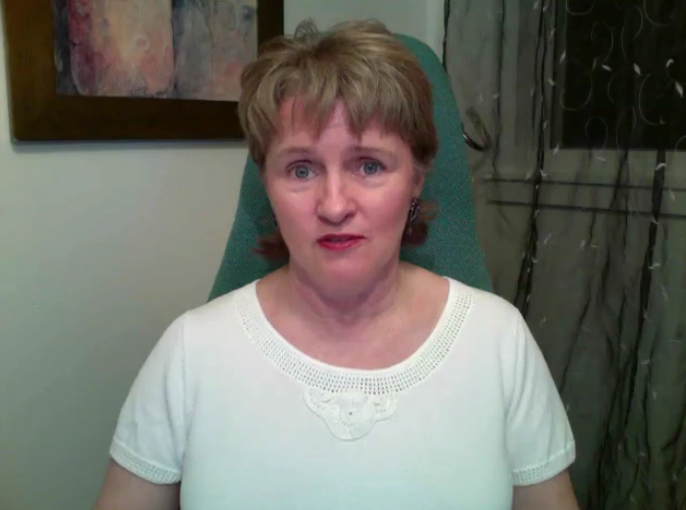
This short film expresses it clearly.
Recommended Reading
I think this book is a great complement to counseling. (Click through to Amazon to learn more about this little gem.)
Also see: "Self-Esteem", M. McKay, Ph.D., and P. Fanning
New Harbinger Publications, 2000.
CD Resource
From our Sponsor Enhanced Healing
For a right-brain strategy consider using the subliminal messages in a relaxation music CD.
In relaxed state, your mind is much more receptive to taking in positive beliefs about yourself.
Here's how neuroscience might explain the process:
Relaxation music induces a "relaxed state" in your body. This automatically engages the right-brain. Then you attempt to associate or couple up the left brain belief (i.e. I'm a wonderful person) that you're trying to establish with this new state.
In other words, done repeatedly and over time, the neuropathways associated with relaxation are now connected with the neuropathways related to the belief.
Click through the image to learn more about subliminal relaxation for improvement of self-esteem.
No Comments Yet Received.
(We know you're out there, we can hear you breathing.)


Don't lose track! Add to your FAV bookmarks: