blank
Mind Body

Brenda Pulvermacher

Brenda Pulvermacher


Certified Cranioscral Therapist

kids in counseling

You and 17 others are currently browsing this site.
Altogether now, Happy birthday to you, happy birthday to you,

What is Biodynamic Craniosacral Therapy?

Calms the Body, Stills the Mind, Opens the Heart.

By: Contributing Author, Brenda Pulvermacher B.Sc, RST, BCST
May 31, 2009; Updated: May 18, 2010.

We often hear that our mental outlook influences our health on many levels. It seems obvious that our experiences as a child; the nurturing we did (or did not) receive has a profound effect on our outlook as an adult.

We might ask ourselves how our upbringing, and particularly the quality of attachment with our mothers, determines how we interact with family, friends, colleagues and strangers.

What is the relationship between the growth of the nervous system and how well or poorly we function in the world?

What therapies can we use to dust off our original blue print for health and get back on track?

What emerging research can tells us

Michael Shea, Ph.D. is a renowned Biodynamic Craniosacral Therapy teacher and adjunct faculty at the Institute of Graduate Studies (Santa Barbara). His specialty is the field of embryology.

fetusIn a recent Foundation Training in Vancouver Shea mentioned that emerging research shows us that during the prime time from conception to about the age of two the fetus and infant are completely vulnerable to the mother’s emotional and physical experiences.

Those experiences are absorbed by the infant and are the lens through which the emerging adult not only views but experiences the world.

The amygdale is a critical bilateral structure located in the temporal lobes of the brain. About the size of an almond, the amygdale is oriented to the perception of fear. It is part of the brain that is primarily functioning for the first months of life.

It monitors the vocal tones of people around it, body gestures and facial expressions. The infant is constantly evaluating whether it needs to be afraid or not and stores the memory in the hippocampus in the right hemisphere of the brain.

amygdalaUltimately the stronger repetitive memories of this preverbal time become belief systems. As adults we likely have no memory of their origins.

If I had to make a lot of noise as an infant to get fed then my behavior as an adult is likely to reflect the increased autonomic tone that was imprinted at that time. I might be anxious, hyperactive, have difficulty with asking for what I need. I may develop physical symptoms that seem to be unrelated to my emotional problems.

Allan Schore is a leading researcher in the field of neuropsychology, whose ground-breaking contributions have impacted the fields of affective neuroscience, neuropsychiatry, trauma theory, developmental psychology, attachment theory, pediatrics, infant mental health, psychoanalysis, psychotherapy, and behavioral biology.

Allan SchoreIn a recent presentation on Affect Regulation: Development, Trauma and the Treatment of Brain-Mind-Body, Schore from the UCLA David Geffin School of Medicine referred to a “relational unconscious whereby one unconscious mind communicates with another unconscious mind”.

Quoting Larson (J.Psychosom. Res., 2003) he states ”In most people the verbal, conscious, and serial information processing takes place in the left hemisphere while the unconscious, nonverbal and emotional information processing mainly takes place in the right hemisphere.”

We have here an emerging understanding of an interpersonal neurobiology where there is a right brain to right brain communication through all stages of life.

One of Dr. Schore’s principles is that the client – therapist relationship is a direct analog of the mother-infant relationship. The process of attunement and resonance that occurs between the right hemispheres of the infant-caregiver dyad is especially enhanced in the therapeutic relationship involving manual therapy.

Shore also states that, “A clinician’s effectiveness working with a client is directly related to the capacity to act at an implicit level as a right brain interactive regulator.”

The effectiveness of treatment depends on the client and therapist forming a good working relationship.  I might add that it also depends on a modality that is able to help the client work on a deep level to reprocess the early trauma.

It follows that in order for the work to be effective the therapist must be able to self regulate no matter what complex emotions the client is bringing to the session. Biodynamic Craniosacral Therapy is modality that satisfies these criteria.


A clinician's effectiveness depends on being a right brain interactive
regulator of the client's emotions.


Biodynamic Craniosacral Therapy (BCST) developed out of the work of the early experimental osteopaths. Dr W. Sutherland is credited with discovering the many rhythmical movements that occur within our bodily fluids.

Early in his career as medical student he noticed that the bones of the head looked like they were designed for movement. He explored this hypothesis with a group of inquisitive osteopaths and went on to have a profound realization that the cranium is designed to express small degrees of motion and move according to tidal rhythms.

The entire structure of the body is moved and shaped by these rhythms.

tidal rythms

After years of study he came to the conclusion that the rhythms were generated by a life force carried in the fluids. He called it the “breath of life” and the slowest most stable rhythm that springs from it, Primary Respiration.

Primary Respiration is the organizing force which is our embryological blue print for health. It manifests at conception and is with us all our lives as a force for healing and renewal.

Currently the two year training in biodynamic Craniosacral Therapy (BCST) includes cross disciplinary training in embryology, which reinforces the perception that the health of the system moves throughout the fluids organizing and harmonizing the formation of the physical structures from the moment of conception.

Other subjects covered in the training are contemplative spiritual practice, neurology, and somatic psychology including studies in pre-natal and attachment psychology. Many therapists take additional studies in trauma resolution and therapeutic imagery and dialogue.


Have a Question about Biodynamic Craniosacral Therapy?

Let Brenda answer it for you.


We'll let you know when your question gets answered in MyShrink UpDates. As a convenience, you will be automatically subscribed to MyShrink UpDates (if you're not already a subscriber).

MyShrink UpDates contains tips on therapy, brain fitness tools, affirmations and much more.

A typical craniosacral session

In a typical BCST session the therapist attends to the client’s needs for warmth, positional comfort, hydration and very importantly, safety. The therapist negotiates contact using a slow and respectful approach; the touch is comfortable and nurturing.

Here is the right brain to right brain connection that mimics that of infant and mother. The intention of the treatment is to align with the movement of Primary Respiration as it travels through the fluids allowing the body to self-heal and self regulate.

Scott Engler, a BCST from California, describes it this way, “Think of how a river, in its strong impulse to find its course following gravity, will always find a way around and through whatever rocks, logs, and other obstacles appear in its path. The shape of its course may be affected, the strength of its flow may be diminished, but its inherent nature as flow is never diminished.”

flowing river like the rhythms of our bodyThe fully clothed client is usually positioned on their back. The therapist will begin by taking time to settle and become wholly present to the unfolding process.

If the client has had a particularly stormy connection with their mother extra care and attention to the details and nuance of coming into relationship will be required.

A variety of techniques can be employed but most often just sitting quietly and breathing until there is sense of shared relaxation and connection.

With permission, the therapist approaches the client and lightly contacts the feet or perhaps the shoulder and thigh waiting for the health of the whole system to manifest. This gentle nurturing touch puts us in contact with the client’s deepest impulse for life, commonly known as the Tide.

We attend to the client’s health with a floating touch in synch with Primary Respiration and holding an open space for the stillness that often accompanies the process.  Patterns of imbalance and disturbance that may have been laid down recently or from infancy or even in-utero  begin to  reveal themselves and to reorganize and dissolve into the Tide returning to the inherent health of our original blueprint.

We have many anecdotal reports that BCST is effective for a wide range of health concerns. Because it is a holistic approach it is always advisable to have an attitude that allows space for the process to unfold between yourself and your therapist. For instance your secondary concern, knee pain, may disappear before your insomnia.

Some of the conditions that have responded to BCST

  • Chronic back pain
  • Anxiety/depression
  • Tinnitus/dizziness
  • Insomnia
  • Birth trauma in infants and adults
  • Headaches
  • Earaches
  • Pregnancy discomfort
  • Hormonal imbalances
  • Immune system concerns
  • Temporomandibular joint disorder: jaw pain
  • Digestive problems
  • Learning challenges

BCST is suitable for all ages and is particularly helpful during pregnancy and infancy. We have to assume that our mothers’ did the best they could for us and for most of us that was “good enough”.

Yet for many of us there are places in our being where unexplained forces seem to keep us on treadmill of reaction, short circuiting our best intentions for growth and change. Biodynamic CST is a therapy that offers a way to transform some of these deep seated patterns allowing us to open to change in a new and delicious way.


“ The same stream of life that runs through my veins night and day runs through the world and dances in rhythmic measures. . ." 


Rabindranath Tagore, from Gitanjali


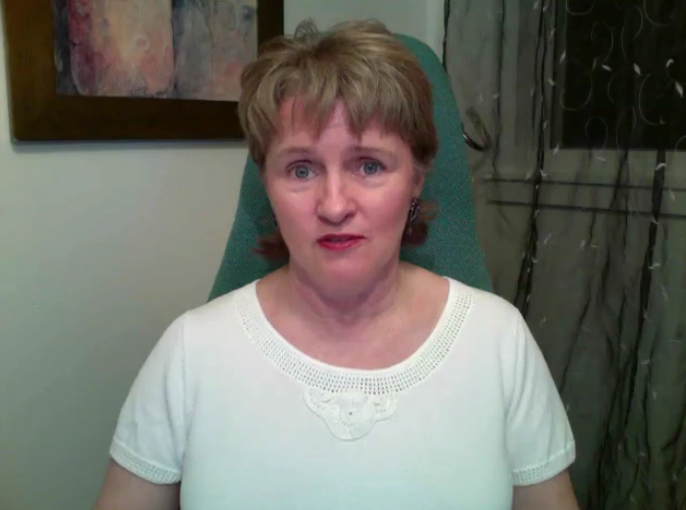
craniosacral therapist brenda pulvermacher

Brenda Pulvermacher B.Sc is Biodynamic Craniosacral Therapist in private practice at Ocean Wellness in North Vancouver.

She can be reached at 604-986-9355 or brendapulver@shaw.ca
Vancouver Craniosacral

External Resource

Dr. Micheal Shea

How did you like this page?

Don't lose track! Add to your FAV bookmarks:

Counseling Home  •  What is a psychotherapist?  •  Body Psychotherapy  •  What is emotional health?
Anxiety Attack Symptoms  •  Signs of Depression  •  Mind Body Connection
How does the brain work?  •  Counseling Theories  •  Psychotherapy Training  •  Transference